TROPHY ARTICLE SERIES: Atherton Charity Cup
Tue 24th December 2019 | General | By Craig Kendall
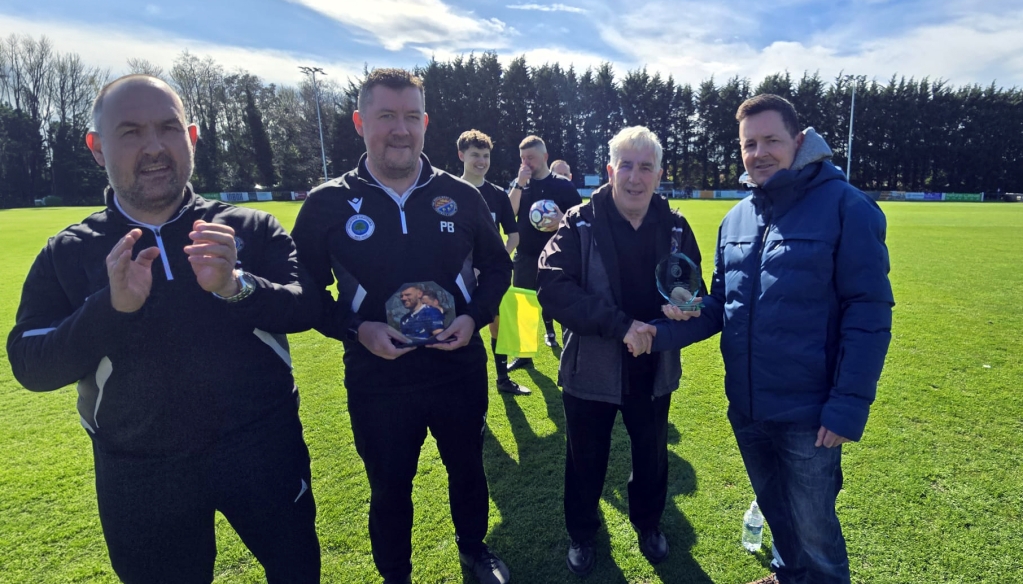
The photograph which illustrates this article is unusual in that it shows two trophies. This is worthy of a few words of explanation.
The smaller of the two trophies is the original winner’s trophy. This is inscribed as being presented by W. Hollgate, a jeweller of Leigh, in 1949. The trophy stands some 9 inches tall with a double decked base.
The bands on the base indicate, as usual, the clubs to which this trophy has been awarded. The early dates show the winners of the competition with later dates showing the runners-up. Something of a mystery perhaps but all will be revealed.
Included on the roll of honour for this trophy are a few well known club names to followers of NWCFL football including former members Atherton Collieries and current member clubs such as Ashton Town, Daisy Hill and Prestwich Heys.
The second, larger, trophy was presented by W.Worthington Esq in April 1955 (see reference below to Mr. H. Worthington). As with the smaller trophy, this one has a double decked base with bands showing previous winners. The trophy itself is some 11 inches high and is stamped E.P.N.S.A1.
The E.P.N.S. part of this refers to the piece being made of Electroplated Nickel Silver, a technique involving plating of an object made of a base metal (often nickel) with silver. The A.1 reference is an indication of high quality.
Again we see the names of previous winners on the base but, this time, with no reference to runners up. These winners again include many names of NWCFL member clubs including both Ashton Town and Ashton Athletic.
So now we reach the explanation of the photograph of two trophies and it turns out that the smaller 1949 trophy was used as the winners trophy until the larger 1955 trophy came on to the scene. From that point on the larger trophy was presented to the winners with the smaller trophy being relegated, as it were, to become the runners up trophy.
The origins of the competition are a little speculative but a source from 1997 suggests that it goes something like this.
On May 3rd 1946 a charity match between Lancashire United Transport and Burnley Transport was played with the proceeds going to the Burnden disaster fund. The Burnden Park Disaster occurred on March 9th 1946 during a Sixth Round, second leg, FA Cup tie between Bolton Wanderers and Stoke City in front of a crowd of over 85,000 and resulted in 33 deaths due to crushing. This led to the Moelwyn Hughes Report which advocated more rigorous control of crowd sizes.
The two individuals who organised that charity match, Mr. A. Parkinson and Mr. H. Worthington of Lancashire United Transport, appear on the list of over 30 members of one of the early committees of the Atherton Charity Cup – there are significantly fewer now!
The early years of the competition saw the involvement, usually in a ceremonial sense, of well known local footballers including, in 1954, the then Bolton Wanders captain Willie Moir who kicked off the match and then presented the trophies at the end. Moir, a Scotsman, made his name at Bolton Wanderers by becoming the leading scorer in the 1948/49 season in a side which also contained Nat Lofthouse – quite and achievement! Moir gained just the one international cap featuring in a match against England in 1950 which was won by England 1-0.
Over the seasons any surplus from the competition has been donated to local charities
The 2019/20 competition is being run initially in group stages with Atherton LR and Daisy Hill representing the NWCFL.
With thanks to Ian Williams of the NWCFL for his contribution to this article.
TROPHY ARTICLE SERIES: Atherton Charity Cup
Tue 24th December 2019 | General
By Craig Kendall
The photograph which illustrates this article is unusual in that it shows two trophies. This is worthy of a few words of explanation.
The smaller of the two trophies is the original winner’s trophy. This is inscribed as being presented by W. Hollgate, a jeweller of Leigh, in 1949. The trophy stands some 9 inches tall with a double decked base.
The bands on the base indicate, as usual, the clubs to which this trophy has been awarded. The early dates show the winners of the competition with later dates showing the runners-up. Something of a mystery perhaps but all will be revealed.
Included on the roll of honour for this trophy are a few well known club names to followers of NWCFL football including former members Atherton Collieries and current member clubs such as Ashton Town, Daisy Hill and Prestwich Heys.
The second, larger, trophy was presented by W.Worthington Esq in April 1955 (see reference below to Mr. H. Worthington). As with the smaller trophy, this one has a double decked base with bands showing previous winners. The trophy itself is some 11 inches high and is stamped E.P.N.S.A1.
The E.P.N.S. part of this refers to the piece being made of Electroplated Nickel Silver, a technique involving plating of an object made of a base metal (often nickel) with silver. The A.1 reference is an indication of high quality.
Again we see the names of previous winners on the base but, this time, with no reference to runners up. These winners again include many names of NWCFL member clubs including both Ashton Town and Ashton Athletic.
So now we reach the explanation of the photograph of two trophies and it turns out that the smaller 1949 trophy was used as the winners trophy until the larger 1955 trophy came on to the scene. From that point on the larger trophy was presented to the winners with the smaller trophy being relegated, as it were, to become the runners up trophy.
The origins of the competition are a little speculative but a source from 1997 suggests that it goes something like this.
On May 3rd 1946 a charity match between Lancashire United Transport and Burnley Transport was played with the proceeds going to the Burnden disaster fund. The Burnden Park Disaster occurred on March 9th 1946 during a Sixth Round, second leg, FA Cup tie between Bolton Wanderers and Stoke City in front of a crowd of over 85,000 and resulted in 33 deaths due to crushing. This led to the Moelwyn Hughes Report which advocated more rigorous control of crowd sizes.
The two individuals who organised that charity match, Mr. A. Parkinson and Mr. H. Worthington of Lancashire United Transport, appear on the list of over 30 members of one of the early committees of the Atherton Charity Cup – there are significantly fewer now!
The early years of the competition saw the involvement, usually in a ceremonial sense, of well known local footballers including, in 1954, the then Bolton Wanders captain Willie Moir who kicked off the match and then presented the trophies at the end. Moir, a Scotsman, made his name at Bolton Wanderers by becoming the leading scorer in the 1948/49 season in a side which also contained Nat Lofthouse – quite and achievement! Moir gained just the one international cap featuring in a match against England in 1950 which was won by England 1-0.
Over the seasons any surplus from the competition has been donated to local charities
The 2019/20 competition is being run initially in group stages with Atherton LR and Daisy Hill representing the NWCFL.
With thanks to Ian Williams of the NWCFL for his contribution to this article.