| P | W | D | L | F | A | Pts |
| 11 | 5 | 3 | 3 | 20 | 12 | 18 |
| P | W | D | L | F | A |
| 6 | 2 | 1 | 3 | 8 | 12 |
| Date | Opponent | Score |
|---|---|---|
| 03/10/26 | Maghull (A) | L 1-2 |
| 26/09/26 | Fulwood Amateurs (A) | L 0-5 |
| 22/09/26 | Bamber Bridge (A) | L 3-4 |
| 19/09/26 | Daisy Hill (A) | W 1-0 |
| 15/09/26 | Holker Old Boys (H) | D 1-1 |
| 12/09/26 | Tow Law Town (A) | W 2-0 |
| Date | Opponent | K.O. |
|---|---|---|
| 07/10/26 | Woolton (A) | 19:45 |
| 10/10/26 | Maghull (A) | 15:00 |
| 13/10/26 | Flixton (A) | 19:45 |
| 17/10/26 | AFC Blackpool (A) | 15:00 |
| 24/10/26 | Ashton Town (H) | 15:00 |
| 31/10/26 | Bacup Borough (A) | 15:00 |
 | Lucas Weaver receives Premier Division Player of the Month Award |
| The Colne Player was visited recently to be presented with his January 2024 award |
| Nigel Coates |
| It is with regret we have to report the death of former Colne manager Nigel Coates. |
| Reaction from Colne |
| After clinching the Premier Division title this afternoon, representatives from Colne gave their reaction to the day's events. |
| Colne Crowned Premier Division Champions |
| Congratulations to Colne, who were crowned Premier Division champions this afternoon after a 1-0 win over 1874 Northwich at the Barton Stadium. |
| Date | Opposition | H/A | K.O. | Score | Goalscorers |
|---|---|---|---|---|---|
| Sat 01/08/26 | Woolton | H | 15:00 | L 1-3 | Miles Storey (50) |
| Tue 04/08/26 | Darwen FC | H | 19:45 | Postp | |
| Sat 08/08/26 | Garstang | A | 15:00 | W 3-0 | Joshua Talks (57) Miles Storey (79) Corey Stacey (89) |
| (The Edward Case Cup P N) | |||||
| Tue 11/08/26 | Maine Road | H | 19:45 | L 1-3 | Luke Stowe (69) |
| Sat 15/08/26 | Barnoldswick Town | A | 15:00 | W 2-1 | Barney Wiggin (30p) Corey Adams (32) |
| (The FA Vase 1Q) | |||||
| Tue 18/08/26 | Fulwood Amateurs | A | 19:45 | D 2-2 | Miles Storey (49) Barney Wiggin (60) |
| Sat 22/08/26 | Uppermill | H | 15:00 | W 3-0 | Mohammed Butt (50) Barney Wiggin (57) Jamie Walker (67) |
| Sat 29/08/26 | Garstang | A | 15:00 | D 1-1 | Finley Denning (69) |
| Tue 01/09/26 | Bacup Borough | H | 19:45 | W 1-0 | Barney Wiggin (54) |
| Sat 05/09/26 | Squires Gate | A | 15:00 | W 2-0 | Saul Guffog (68p) Barney Wiggin (90+1) |
| Tue 08/09/26 | Darwen FC | H | 19:45 | W 6-0 | Barney Wiggin (9) Finley Denning (38) Barney Wiggin (45) Jamie Walker (50) Barney Wiggin (57) Jamie Walker (60) |
| Sat 12/09/26 | Tow Law Town | A | 15:00 | W 2-0 | Jack Banks (40) Barney Wiggin (77) |
| (The FA Vase 2Q) | |||||
| Tue 15/09/26 | Holker Old Boys | H | 19:45 | D 1-1 | Barney Wiggin (81) |
| Sat 19/09/26 | Daisy Hill | A | 15:00 | W 1-0 | Jamie Walker (6) |
| Tue 22/09/26 | Bamber Bridge | A | 19:45 | L 3-4 | Barney Wiggin (49) Harry Lynn (58) Barney Wiggin (66) |
| (Lancashire Challenge Trophy 1) | |||||
| Sat 26/09/26 | Fulwood Amateurs | A | 15:00 | L 0-5 | |
| (The Macron Cup 1) | |||||
| Sat 03/10/26 | Maghull | A | 15:00 | L 1-2 | Barney Wiggin (6) |
| Wed 07/10/26 | Woolton | A | 19:45 | ||
| (The Edward Case Cup 1 N) | |||||
| Sat 10/10/26 | Maghull | A | 15:00 | ||
| (The FA Vase 1) | |||||
| Tue 13/10/26 | Flixton | A | 19:45 | ||
| Sat 17/10/26 | AFC Blackpool | A | 15:00 | ||
| Sat 24/10/26 | Ashton Town | H | 15:00 | ||
| Sat 31/10/26 | Bacup Borough | A | 15:00 | ||
| Sat 07/11/26 | Ashton Athletic | H | 15:00 | ||
| Sat 14/11/26 | Cammell Laird 1907 | H | 15:00 | ||
| Sat 21/11/26 | Holker Old Boys | A | 15:00 | ||
| Sat 28/11/26 | Fulwood Amateurs | H | 15:00 | ||
| Sat 05/12/26 | Ashville | A | 15:00 | ||
| Sat 12/12/26 | Daisy Hill | H | 15:00 | ||
| Sat 19/12/26 | Thornton Cleveleys | H | 15:00 | ||
| Sat 26/12/26 | Steeton | A | 15:00 | ||
| Sat 02/01/27 | Flixton | H | 15:00 | ||
| Sat 09/01/27 | Cammell Laird 1907 | A | 15:00 | ||
| Sat 16/01/27 | Ashton Town | A | 15:00 | ||
| Tue 19/01/27 | AFC Blackpool | H | 19:45 | ||
| Sat 23/01/27 | AFC Knowsley | A | 15:00 | ||
| Sat 30/01/27 | Thornton Cleveleys | A | 15:00 | ||
| Sat 06/02/27 | Halewood Apollo | H | 15:00 | ||
| Sat 13/02/27 | Maine Road | A | 15:00 | ||
| Sat 20/02/27 | Maghull | H | 15:00 | ||
| Sat 27/02/27 | Ashton Athletic | A | 15:00 | ||
| Sat 06/03/27 | Ashville | H | 15:00 | ||
| Tue 09/03/27 | Squires Gate | H | 19:45 | ||
| Sat 13/03/27 | Woolton | A | 15:00 | ||
| Sat 20/03/27 | Garstang | H | 15:00 | ||
| Sat 27/03/27 | Darwen FC | A | 15:00 | ||
| Mon 29/03/27 | Steeton | H | 15:00 | ||
| Sat 03/04/27 | Uppermill | A | 15:00 | ||
| Sat 10/04/27 | AFC Knowsley | H | 15:00 | ||
| Sat 17/04/27 | Halewood Apollo | A | 15:00 | ||
| Date | Opposition | KO/Score | |
|---|---|---|---|
| Sat 01/08/26 | Woolton (H) | L 1-3 | |
| Tue 04/08/26 | Darwen FC (H) | Postp | |
| Sat 08/08/26 | Garstang (A) | W 3-0 | |
| (The Edward Case Cup P N) | |||
| Tue 11/08/26 | Maine Road (H) | L 1-3 | |
| Sat 15/08/26 | Barnoldswick Town (A) | W 2-1 | |
| (The FA Vase 1Q) | |||
| Tue 18/08/26 | Fulwood Amateurs (A) | D 2-2 | |
| Sat 22/08/26 | Uppermill (H) | W 3-0 | |
| Sat 29/08/26 | Garstang (A) | D 1-1 | |
| Tue 01/09/26 | Bacup Borough (H) | W 1-0 | |
| Sat 05/09/26 | Squires Gate (A) | W 2-0 | |
| Tue 08/09/26 | Darwen FC (H) | W 6-0 | |
| Sat 12/09/26 | Tow Law Town (A) | W 2-0 | |
| (The FA Vase 2Q) | |||
| Tue 15/09/26 | Holker Old Boys (H) | D 1-1 | |
| Sat 19/09/26 | Daisy Hill (A) | W 1-0 | |
| Tue 22/09/26 | Bamber Bridge (A) | L 3-4 | |
| (Lancashire Challenge Trophy 1) | |||
| Sat 26/09/26 | Fulwood Amateurs (A) | L 0-5 | |
| (The Macron Cup 1) | |||
| Sat 03/10/26 | Maghull (A) | L 1-2 | |
| Wed 07/10/26 | Woolton (A) | 19:45 | |
| (The Edward Case Cup 1 N) | |||
| Sat 10/10/26 | Maghull (A) | 15:00 | |
| (The FA Vase 1) | |||
| Tue 13/10/26 | Flixton (A) | 19:45 | |
| Sat 17/10/26 | AFC Blackpool (A) | 15:00 | |
| Sat 24/10/26 | Ashton Town (H) | 15:00 | |
| Sat 31/10/26 | Bacup Borough (A) | 15:00 | |
| Sat 07/11/26 | Ashton Athletic (H) | 15:00 | |
| Sat 14/11/26 | Cammell Laird 1907 (H) | 15:00 | |
| Sat 21/11/26 | Holker Old Boys (A) | 15:00 | |
| Sat 28/11/26 | Fulwood Amateurs (H) | 15:00 | |
| Sat 05/12/26 | Ashville (A) | 15:00 | |
| Sat 12/12/26 | Daisy Hill (H) | 15:00 | |
| Sat 19/12/26 | Thornton Cleveleys (H) | 15:00 | |
| Sat 26/12/26 | Steeton (A) | 15:00 | |
| Sat 02/01/27 | Flixton (H) | 15:00 | |
| Sat 09/01/27 | Cammell Laird 1907 (A) | 15:00 | |
| Sat 16/01/27 | Ashton Town (A) | 15:00 | |
| Tue 19/01/27 | AFC Blackpool (H) | 19:45 | |
| Sat 23/01/27 | AFC Knowsley (A) | 15:00 | |
| Sat 30/01/27 | Thornton Cleveleys (A) | 15:00 | |
| Sat 06/02/27 | Halewood Apollo (H) | 15:00 | |
| Sat 13/02/27 | Maine Road (A) | 15:00 | |
| Sat 20/02/27 | Maghull (H) | 15:00 | |
| Sat 27/02/27 | Ashton Athletic (A) | 15:00 | |
| Sat 06/03/27 | Ashville (H) | 15:00 | |
| Tue 09/03/27 | Squires Gate (H) | 19:45 | |
| Sat 13/03/27 | Woolton (A) | 15:00 | |
| Sat 20/03/27 | Garstang (H) | 15:00 | |
| Sat 27/03/27 | Darwen FC (A) | 15:00 | |
| Mon 29/03/27 | Steeton (H) | 15:00 | |
| Sat 03/04/27 | Uppermill (A) | 15:00 | |
| Sat 10/04/27 | AFC Knowsley (H) | 15:00 | |
| Sat 17/04/27 | Halewood Apollo (A) | 15:00 | |
| Player Name | Appearances | Goals | Reds | Yellows | Mom |
| Corey Adams | 2+3 | 1 | 0 | 0 | 0 |
| Daniel Ajidagba | 2+2 | 0 | 0 | 0 | 0 |
| Jack Banks | 11 | 1 | 1 | 1 | 1 |
| Lucas Bull | 1+4 | 0 | 0 | 1 | 0 |
| Thomas Dean | 2 | 0 | 0 | 0 | 0 |
| Finley Denning | 7+1 | 2 | 0 | 1 | 0 |
| Tristan Fitzpatrick | 5+4 | 0 | 0 | 0 | 0 |
| Ben Fletcher | 0 | 0 | 0 | 0 | 0 |
| Saul Guffog | 10+1 | 1 | 0 | 1 | 0 |
| Lennie Halstead | 1+3 | 0 | 0 | 1 | 0 |
| William Handley | 2 | 0 | 0 | 0 | 0 |
| Alex-Ray Harvey | 9+1 | 0 | 0 | 0 | 0 |
| Luca Heys | 0+2 | 0 | 0 | 0 | 0 |
| Jack Holt | 2+2 | 0 | 0 | 0 | 0 |
| Benjamin Horne | 7+2 | 0 | 0 | 3 | 0 |
| Daniel Jackson | 5+3 | 0 | 0 | 2 | 0 |
| Daniel Jones | 0+1 | 0 | 0 | 0 | 0 |
| Sam Lloyd | 10+3 | 0 | 0 | 0 | 0 |
| Harry Lynn | 2 | 1 | 0 | 0 | 0 |
| Lewis Nolan | 7+1 | 0 | 0 | 0 | 2 |
| Joseph Pennington | 7+1 | 0 | 0 | 0 | 1 |
| Corey Stacey | 6+4 | 1 | 0 | 2 | 0 |
| Miles Storey | 9+1 | 3 | 0 | 0 | 2 |
| Luke Stowe | 11+2 | 1 | 0 | 1 | 1 |
| Joshua Talks | 9+1 | 1 | 0 | 1 | 0 |
| Harry Turner | 13 | 0 | 0 | 0 | 0 |
| Jamie Walker | 13+2 | 4 | 0 | 1 | 0 |
| Barney Wiggin | 11+1 | 12 | 0 | 2 | 3 |
| Player Name | Appearances | Goals | Reds | Yellows | Mom |
| Mohammed Butt | 1+4 | 1 | 0 | 0 | 0 |
| Name | ||
|---|---|---|
| Marco Ballenca | Coach | |
| Paul Bradley | Coach | |
| Andrew Harrison | Manager | |
| Anthony Heys | Coach | |
| Jack Holt | Coach | |
| Arshad Ranguni | Coach / Physio | |
| Player Name | Apps | Goals |
| Corey Adams | 2+3 | 1 |
| Daniel Ajidagba | 2+2 | 0 |
| Jack Banks | 11 | 1 |
| Lucas Bull | 1+4 | 0 |
| Thomas Dean | 2 | 0 |
| Finley Denning | 7+1 | 2 |
| Tristan Fitzpatrick | 5+4 | 0 |
| Ben Fletcher | 0 | 0 |
| Saul Guffog | 10+1 | 1 |
| Lennie Halstead | 1+3 | 0 |
| William Handley (GK) | 2 | 0 |
| Alex-Ray Harvey | 9+1 | 0 |
| Luca Heys | 0+2 | 0 |
| Jack Holt | 2+2 | 0 |
| Benjamin Horne | 7+2 | 0 |
| Daniel Jackson | 5+3 | 0 |
| Daniel Jones | 0+1 | 0 |
| Sam Lloyd | 10+3 | 0 |
| Harry Lynn | 2 | 1 |
| Lewis Nolan | 7+1 | 0 |
| Joseph Pennington | 7+1 | 0 |
| Corey Stacey | 6+4 | 1 |
| Miles Storey | 9+1 | 3 |
| Luke Stowe | 11+2 | 1 |
| Joshua Talks | 9+1 | 1 |
| Harry Turner (GK) | 13 | 0 |
| Jamie Walker | 13+2 | 4 |
| Barney Wiggin | 11+1 | 12 |
| Player Name | Apps | Goals |
| Mohammed Butt | 1+4 | 1 |
| Name | ||
|---|---|---|
| Marco Ballenca | Coach | |
| Paul Bradley | Coach | |
| Andrew Harrison | Manager | |
| Anthony Heys | Coach | |
| Jack Holt | Coach | |
| Arshad Ranguni | Coach / Physio | |
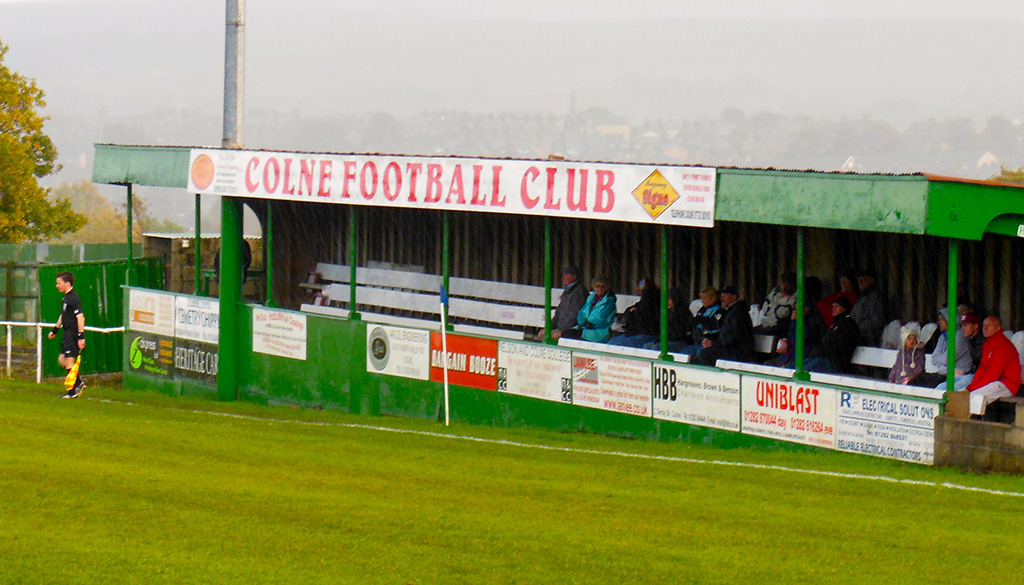
Ground: DM Pies Stadium
Address: Holt House Stadium, Harrison Drive, Colne, Lancashire
Postcode: BB8 9SL
Telephone: 01282 862545
Midweek Night: Tuesday
2026/27 Admission Prices: Adult £7, Concessions £5, Under 18’s Free
Programme Price: 3.00
Directions: Follow M65 to end of motorway. Turn left and follow signs for Skipton and Keighley, continue to roundabout, take 1st left up Harrison Drive, across small roundabout, follow road to ground.
Nearest Railway: Colne
Nearest Bus Route to Ground: Any mainline bus with the nearest stop at the Crown adjacent to the railway station.
Parking Facilities: Free parking available around the ground.
Ground Facilities: On match days, the club operates two bars, one side the club house and one outside next to the Reds Cafe. Cash and card are accepted at both bars and the reds cafe.
Four legged friends more than welcome.
Additional Visitor Information:
Legal Entity: Community Benefit Society C/N 9043
Ground: DM Pies Stadium
Address: Holt House Stadium, Harrison Drive, Colne, Lancashire
Postcode: BB8 9SL
Telephone: 01282 862545
Website: http://www.colnefc.com/
Twitter: @Colne_FC
Registered Colours: Red Shirts, Black Shorts, Red Stockings
Registered Goalkeeper Colours: Green Shirt, Green Shorts, Green Stockings
Alternative Colours: White Shirts, Black Shorts, Red Stockings
Alternative Goalkeeper Colours: Orange Shirt, Orange Shorts, Orange Stockings
Secretary: David Moy
Chairman: Ben Metcalfe
Manager: Andy Harrison
Programme Editor: Ben Metcalfe
Committee / Directors: Ben Metcalfe, David Jackson, David Moy, Janette Harries, Joanne Jackson, Michael Cummings, Nick Peacock, Nick Thompson, Richard Harries, Trevor Abraham
County Affiliation: Lancashire FA
Year Formed: 1996
Record Attendance: 1,742 v. Sudbury (F.A. Vase) 2004
Previous Leagues:
None
Honours:
BEP Cup Winners 1996-97
NWCFL Division Two Champions 2003-04
NWCFL Second Division Trophy Winners 2003-04
NWCFL Reserve Division Cup Winners 2004-05
NWCFL Reserve Division Trophy Winners 2004-05
2023/24 LFA Trophy Winners