Turn Right at Mottram Roundabout - Episode 37
Tue 11th April 2017 | General | By Stewart Taylor
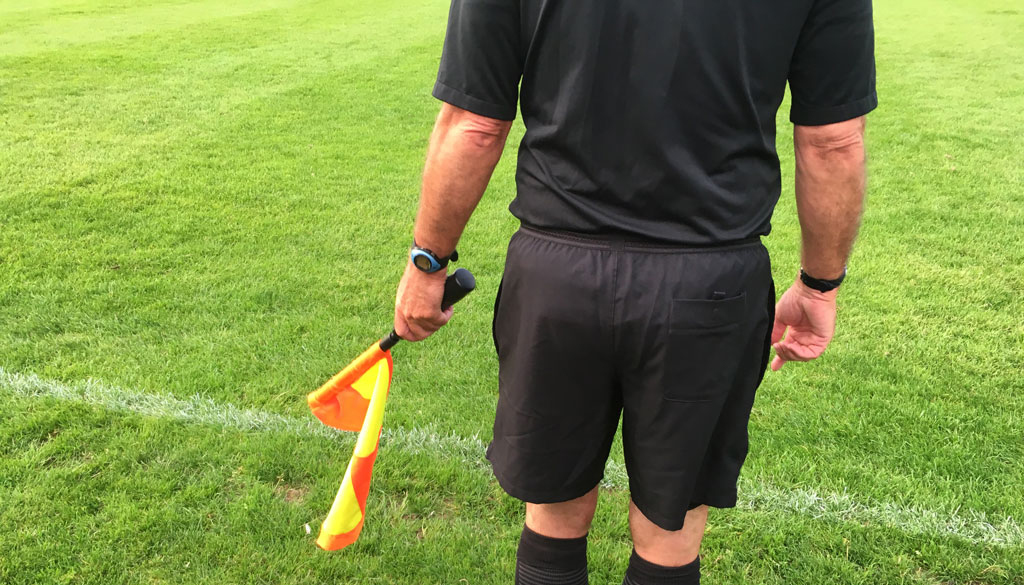
Our destination last week was Daisy Hill and the photo showed a well judged warning to the occupants of technical areas everywhere.
The link was, perhaps, even more obscure than usual. We asked for a link with the band More than Life and the link is that the 8th track on their album Love Let Me Go is called Daisy Hill.
A previous Turn Right at Mottram Roundabout started with a 20th century poem. At the time of writing that one I thought that we may just get the opportunity to again raid the little appreciated poetry of the 20th century.
To me it always seems strange that so much emphasis is placed on earlier poetry - think Chaucer, Shakespeare and the early 19th century English Romantics such as Keats, Shelley, Byron and the rest of "the guys in the band" as they were memorably described by Sergeant Hathaway in an episode of the television series Lewis.
In a token attempt to redress the balance a little we can try this one and see where it takes us.
I must go down to the seas again, to the lonely sea and the sky,
And all I ask is a tall ship and a star to steer her by;
And the wheel’s kick and the wind’s song and the white sail’s shaking,
And a grey mist on the sea’s face, and a grey dawn breaking.
This is the first verse of the very well known poem Sea Fever by John Masefield and captures a little something of the spirit of our destination today.
In his early life, John Masefield spent some time on a naval training facility called HMS Conway which was based within a mile of our final destination today. This was his first experience of any kind of stability in his life having endured a childhood which was fragmented to say the least. It was his time at this training facility which gave him a love of reading and poetry, as he listened to the tales of life at sea.
From this experience he began to write himself and, to cut a long story short, was so successful that he was appointed Poet Laureate in 1930, beating the bookies favourite for the post, Rudyard Kipling, and remained so until his death in 1967. There is a pub which bears his name close by.
Leaving behind 20th century poetry, our final destination sees us in an area which was for a long time rather isolated. As a result of this relative isolation it was local agriculture which dominated the scene. With improving transport links, the town developed a rich industrial heritage. Much of this heritage comes from the strategic location of the town and the skill and ingenuity of one family of engineers.
Manufacturing became the heart of the town and all types of sectors were supplied but dominating them all was transport. Railway carriages were built for train companies around the world in addition to some innovative designs of trains used on the London Underground. Other modes of transport were not neglected and one local firm became famous the world over in one of these sectors.
This development led to an increase in population and a need for better infrastructure became apparent. The first street tramway in Britain was established here as was one of the first “Penny Bazaar” stalls. These stalls, to some extent a fore-runner of the Marks and Spencer shops, were remembered for their slogan which was “Don’t Ask the Price, It’s a Penny” and makes you think of how many people go into the Pound Shops of today and ask what the price of an item is.
The member club we are visiting today has, along with many of our clubs, something of a chequered history. From being formed in the first decade of the 20th century, the club established themselves before the First World War and returned to action in the early 1920s.
The club played in local leagues before being disbanded at the outbreak of the Second World War. After re-starting in a local league the club moved up to a regional league in 1948 and embarked on a number of decades of success at this level being champions on no fewer than 19 occasions.
In 2004 the club joined the NWCFL and achieved the rare feat of successive promotions to play in Division 1 of the Northern Premier League in the 2006-07 season. One season in the Northern Premier League Premier Division followed in the next few years before the club was disbanded in 2014 and subsequently re-formed.
Quick link - What links this club with one of the most famous paintings by the English artist JMW Turner?
Turn Right at Mottram Roundabout - Episode 37
Tue 11th April 2017 | General
By Stewart Taylor
Our destination last week was Daisy Hill and the photo showed a well judged warning to the occupants of technical areas everywhere.
The link was, perhaps, even more obscure than usual. We asked for a link with the band More than Life and the link is that the 8th track on their album Love Let Me Go is called Daisy Hill.
A previous Turn Right at Mottram Roundabout started with a 20th century poem. At the time of writing that one I thought that we may just get the opportunity to again raid the little appreciated poetry of the 20th century.
To me it always seems strange that so much emphasis is placed on earlier poetry - think Chaucer, Shakespeare and the early 19th century English Romantics such as Keats, Shelley, Byron and the rest of "the guys in the band" as they were memorably described by Sergeant Hathaway in an episode of the television series Lewis.
In a token attempt to redress the balance a little we can try this one and see where it takes us.
I must go down to the seas again, to the lonely sea and the sky,
And all I ask is a tall ship and a star to steer her by;
And the wheel’s kick and the wind’s song and the white sail’s shaking,
And a grey mist on the sea’s face, and a grey dawn breaking.
This is the first verse of the very well known poem Sea Fever by John Masefield and captures a little something of the spirit of our destination today.
In his early life, John Masefield spent some time on a naval training facility called HMS Conway which was based within a mile of our final destination today. This was his first experience of any kind of stability in his life having endured a childhood which was fragmented to say the least. It was his time at this training facility which gave him a love of reading and poetry, as he listened to the tales of life at sea.
From this experience he began to write himself and, to cut a long story short, was so successful that he was appointed Poet Laureate in 1930, beating the bookies favourite for the post, Rudyard Kipling, and remained so until his death in 1967. There is a pub which bears his name close by.
Leaving behind 20th century poetry, our final destination sees us in an area which was for a long time rather isolated. As a result of this relative isolation it was local agriculture which dominated the scene. With improving transport links, the town developed a rich industrial heritage. Much of this heritage comes from the strategic location of the town and the skill and ingenuity of one family of engineers.
Manufacturing became the heart of the town and all types of sectors were supplied but dominating them all was transport. Railway carriages were built for train companies around the world in addition to some innovative designs of trains used on the London Underground. Other modes of transport were not neglected and one local firm became famous the world over in one of these sectors.
This development led to an increase in population and a need for better infrastructure became apparent. The first street tramway in Britain was established here as was one of the first “Penny Bazaar” stalls. These stalls, to some extent a fore-runner of the Marks and Spencer shops, were remembered for their slogan which was “Don’t Ask the Price, It’s a Penny” and makes you think of how many people go into the Pound Shops of today and ask what the price of an item is.
The member club we are visiting today has, along with many of our clubs, something of a chequered history. From being formed in the first decade of the 20th century, the club established themselves before the First World War and returned to action in the early 1920s.
The club played in local leagues before being disbanded at the outbreak of the Second World War. After re-starting in a local league the club moved up to a regional league in 1948 and embarked on a number of decades of success at this level being champions on no fewer than 19 occasions.
In 2004 the club joined the NWCFL and achieved the rare feat of successive promotions to play in Division 1 of the Northern Premier League in the 2006-07 season. One season in the Northern Premier League Premier Division followed in the next few years before the club was disbanded in 2014 and subsequently re-formed.
Quick link - What links this club with one of the most famous paintings by the English artist JMW Turner?