Turn Right at Mottram Roundabout - Episode 40
Tue 25th April 2017 | General | By Stewart Taylor
The final destination in Episode 39 was Whitchurch Alport FC.
The photo shows a side view of the main seated stand just to the right as you come out of the clubhouse.
The quick link asked what links this club with a gritstone pillar located on a hill close to Wirksworth in Derbyshire?
The particular gritstone pillar I had in mind sits on Alport Height and is known as the Alport Stone.
Many of these sometimes random scribblings have spoken about industry in the region and that’s fair enough in the sense that industry has defined our modern landscape.
But what did everyone do when they weren’t at work? Pubs, of course, featured strongly as did football but, since the Industrial Revolution, there was one week which was looked forward to the most - Wakes Week.
In the early days, Wakes Week was the time when factories closed for maintenance so the workers could have the week away from work, but they were not paid. Rather, they put a bit of money aside each week and that paid for a week away at a seaside town.
The idea of paid holidays, although initially agreed in the early part of the 20th century, didn’t become a reality until after the Second World War.
In order to spread the effect of Wakes Week on seaside towns, the industrialised towns organised themselves so that a different town was on holiday for each week between June and September.
The accommodation of choice was generally small guest houses although larger hotels were built in a number of towns and many of these survive today. It was commonplace for guests to bring their own food to the guest houses where the owner would then cook the food for the guests.
One of the lasting memories for many was the charge for using salt and pepper – “sixpence for the cruet” was added to many a bill at the end of the week and, perhaps not surprisingly, was often a source of disputes.
The first half of the 20th century saw the gradual development of an alternative to the guest houses in the shape of the holiday camp. Originally tented, these camps came to be characterised by providing accommodation in chalets – with rather thin walls as some contemporary accounts attest.
These differed from guest houses not only in the size of the establishments – some could hold as many as 10,000 guests – but also that there was a choice between full board, half board and self catering. This latter option was the least preferred amongst the wives of the families, as they thought they were due a week off as well as the men, but it was the cheapest option and, in many cases, the only affordable one.
The other big difference from the more traditional guest house type of holiday was the provision on site of entertainment.
If we gloss over the slapstick humour of the daytime poolside activities – knobbly knees competitions etc. – the main entertainment came in the evenings and was orchestrated by what we might now call animators (cf. animateurs (French)).
These individuals were easily identified by the colour of their jackets – red coats, blue, coats, yellow coats depending on the company which owned the site. Many famous entertainers were such animators including Roy Hudd, Jimmy Tarbuck and Dave Allen along with Jimmy Perry. No doubt Mr. Perry, a talented comedy writer, took his inspiration to co-write the hit TV series Hi-de-Hi from his time as a redcoat with Butlin’s.
As an aside, is it only me who sees any similarity between the opening two lines from the theme tune to Hi-di-Hi
Whenever you’re feelin’ lonely,
Or you’re gettin’ in a stew,
and the opening two lines to the song Heartbreak Hotel made famous by Elvis Presley?
Well, since my baby left me
Well, I found a new place to dwell
OK – fair enough, only me then!
Holiday camps thrived until the 1970s when package holidays to destinations in Spain became more affordable. We can say what we like about the merits or otherwise of many different countries but the one thing Spain is much less likely to have than the UK is rain – unless you happen to be a vegetable grower in Murcia this year!
Our destination this week is a district which was the location of one of these holiday camps. Just after the Second World War, what had been a military base was converted into a holiday camp by Pontins.
Originally following the established holiday camp blueprint, the site saw a number of changes in emphasis during its later years eventually closing in 2009. The site is now occupied by housing.
The immediate area of our final destination this week has three football clubs – all of which have spent time in the North West Counties League under a number of names.
The postcodes for these three grounds are almost identical. Supporters of football clubs always get somewhat irate when talk turns to amalgamations or even the sharing of grounds. Think Inter and AC Milan as an example of ground sharing and the furore whenever the thorny subject of a shared ground between Liverpool FC and Everton is discussed.
Similar discussions have been held around these parts but the three clubs continue to play football on their own grounds as completely separate entities.
The specific destination is a club which was established in 1948 and spent many seasons in a feeder league before joining the North West Counties League in 1991. The club gained promotion to the top flight of the NWCFL in 2002.
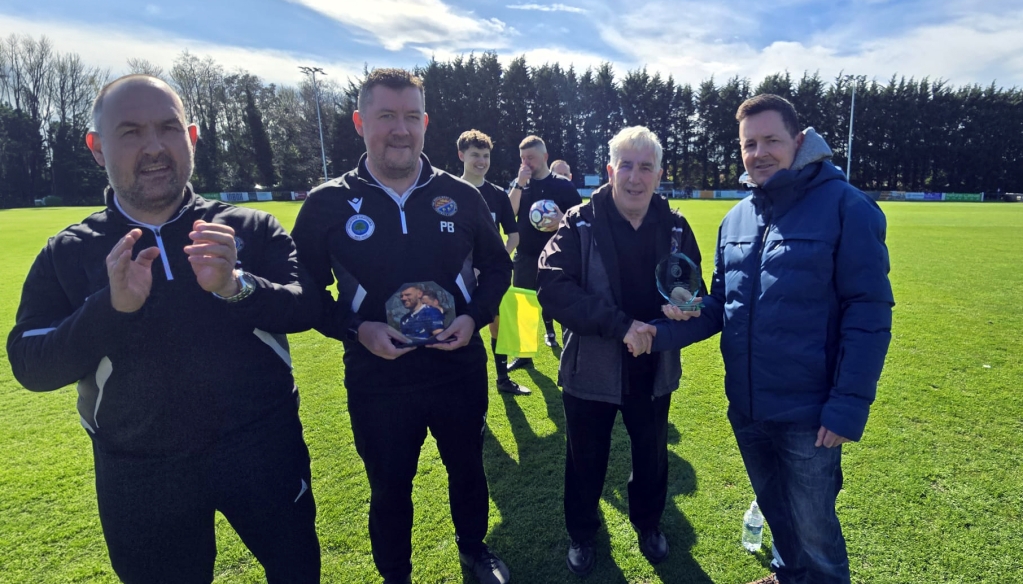
The club is very well known for the loyal volunteers with no fewer than nine individuals honoured with FA long service awards.
Quick link - What links this town with Barnes Wallis the inventor of the Bouncing Bomb used in WWII on the “Dambusters” raids?
Turn Right at Mottram Roundabout - Episode 40
Tue 25th April 2017 | General
By Stewart Taylor
The final destination in Episode 39 was Whitchurch Alport FC.
The photo shows a side view of the main seated stand just to the right as you come out of the clubhouse.
The quick link asked what links this club with a gritstone pillar located on a hill close to Wirksworth in Derbyshire?
The particular gritstone pillar I had in mind sits on Alport Height and is known as the Alport Stone.
Many of these sometimes random scribblings have spoken about industry in the region and that’s fair enough in the sense that industry has defined our modern landscape.
But what did everyone do when they weren’t at work? Pubs, of course, featured strongly as did football but, since the Industrial Revolution, there was one week which was looked forward to the most - Wakes Week.
In the early days, Wakes Week was the time when factories closed for maintenance so the workers could have the week away from work, but they were not paid. Rather, they put a bit of money aside each week and that paid for a week away at a seaside town.
The idea of paid holidays, although initially agreed in the early part of the 20th century, didn’t become a reality until after the Second World War.
In order to spread the effect of Wakes Week on seaside towns, the industrialised towns organised themselves so that a different town was on holiday for each week between June and September.
The accommodation of choice was generally small guest houses although larger hotels were built in a number of towns and many of these survive today. It was commonplace for guests to bring their own food to the guest houses where the owner would then cook the food for the guests.
One of the lasting memories for many was the charge for using salt and pepper – “sixpence for the cruet” was added to many a bill at the end of the week and, perhaps not surprisingly, was often a source of disputes.
The first half of the 20th century saw the gradual development of an alternative to the guest houses in the shape of the holiday camp. Originally tented, these camps came to be characterised by providing accommodation in chalets – with rather thin walls as some contemporary accounts attest.
These differed from guest houses not only in the size of the establishments – some could hold as many as 10,000 guests – but also that there was a choice between full board, half board and self catering. This latter option was the least preferred amongst the wives of the families, as they thought they were due a week off as well as the men, but it was the cheapest option and, in many cases, the only affordable one.
The other big difference from the more traditional guest house type of holiday was the provision on site of entertainment.
If we gloss over the slapstick humour of the daytime poolside activities – knobbly knees competitions etc. – the main entertainment came in the evenings and was orchestrated by what we might now call animators (cf. animateurs (French)).
These individuals were easily identified by the colour of their jackets – red coats, blue, coats, yellow coats depending on the company which owned the site. Many famous entertainers were such animators including Roy Hudd, Jimmy Tarbuck and Dave Allen along with Jimmy Perry. No doubt Mr. Perry, a talented comedy writer, took his inspiration to co-write the hit TV series Hi-de-Hi from his time as a redcoat with Butlin’s.
As an aside, is it only me who sees any similarity between the opening two lines from the theme tune to Hi-di-Hi
Whenever you’re feelin’ lonely,
Or you’re gettin’ in a stew,
and the opening two lines to the song Heartbreak Hotel made famous by Elvis Presley?
Well, since my baby left me
Well, I found a new place to dwell
OK – fair enough, only me then!
Holiday camps thrived until the 1970s when package holidays to destinations in Spain became more affordable. We can say what we like about the merits or otherwise of many different countries but the one thing Spain is much less likely to have than the UK is rain – unless you happen to be a vegetable grower in Murcia this year!
Our destination this week is a district which was the location of one of these holiday camps. Just after the Second World War, what had been a military base was converted into a holiday camp by Pontins.
Originally following the established holiday camp blueprint, the site saw a number of changes in emphasis during its later years eventually closing in 2009. The site is now occupied by housing.
The immediate area of our final destination this week has three football clubs – all of which have spent time in the North West Counties League under a number of names.
The postcodes for these three grounds are almost identical. Supporters of football clubs always get somewhat irate when talk turns to amalgamations or even the sharing of grounds. Think Inter and AC Milan as an example of ground sharing and the furore whenever the thorny subject of a shared ground between Liverpool FC and Everton is discussed.
Similar discussions have been held around these parts but the three clubs continue to play football on their own grounds as completely separate entities.
The specific destination is a club which was established in 1948 and spent many seasons in a feeder league before joining the North West Counties League in 1991. The club gained promotion to the top flight of the NWCFL in 2002.
The club is very well known for the loyal volunteers with no fewer than nine individuals honoured with FA long service awards.
Quick link - What links this town with Barnes Wallis the inventor of the Bouncing Bomb used in WWII on the “Dambusters” raids?