Turn Right at Mottram Roundabout - Episode 35
Tue 28th March 2017 | General | By Stewart Taylor
Episode 34 found us on Merseyside at Litherland REMYCA.
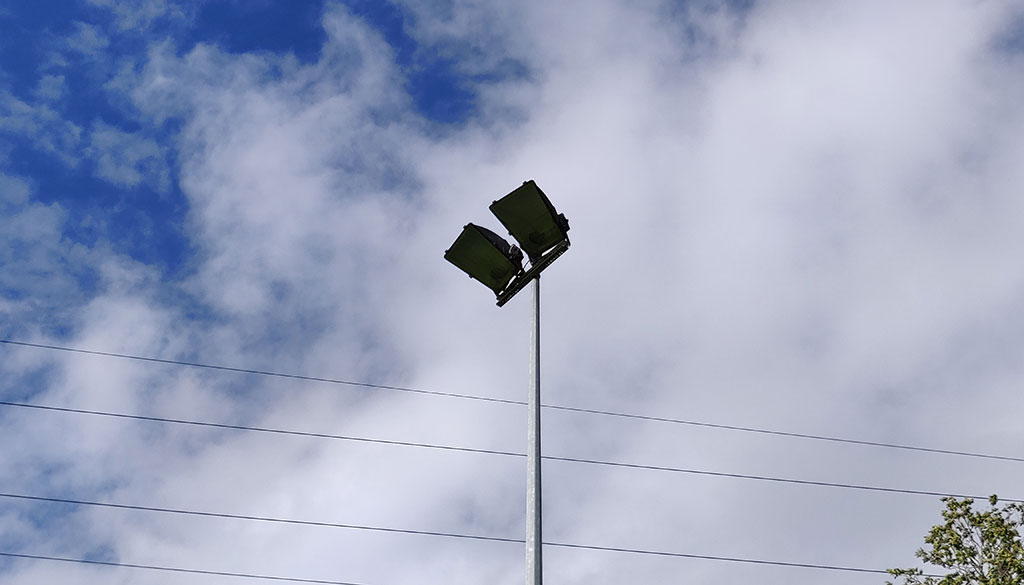
As many will know, Remy play at the multi-sports Litherland Sports Park and the photo showed lane 8 on the straight 100 metres which runs on the far side of the ground.
The quick link was, perhaps a bit obscure and, as in some previous cases, “it’s all in the name”. We asked for a link between the town and the contemporary English singer/songwriter James Blake who won the Mercury Music Prize in 2013.
The link is that James Blake’s full name is James Blake Litherland and for those of us who remember the age of jazz/rock fusion, his father, also called James, was an original member of Coliseum.
But back to canals. Regular readers may recall that a few months ago I promised, if that’s the right word, to say something on the subject of contour canals. Always true to my word, or at least when I remember, here we go.
Living, as we do, in the North West of the country we know a lot about canals. We may not think that we do but those of us familiar with Central Manchester will know of a city defined as much by canals as rivers. If we think here about the areas around Piccadilly Station, Charles Street and Lower Mosley Street then the suggestion is to look behind some of the buildings – mainly old warehouses associated with the rag trade – and there they are.
One of the aspects of physics which is familiar to all is that water will always find its own level. Given this then if there is a requirement to change the level of a body of water something has to be engineered to do that. In the case of canals then we need locks.
However, locks are expensive to build and maintain and time consuming in terms of getting boats through and either up or down to the new level. What if this aspect of canal engineering can be done away with?
This is not a new thought in that most of the early canals of the late 18th century followed the natural contours of the land. This avoided not only locks but also the digging of tunnels and the construction of aqueducts. Such canals tend to meander towards their destination rather than follow the more familiar straight lines.
Our destination this week gives us the opportunity to see a contour canal in a setting which makes you look twice.
We have previously seen many towns which were sleepy backwaters back in the day transformed by the introduction of transport and this one is no exception. Not surprisingly, given the above, it was the canal which transformed this place given that it lies on the route of the longest of the east – west canals in the country. This rather suggests, given that we are in the North of England, that it crosses the Pennines.
Indeed it does, and given the formidable nature of the terrain only part of the canal is contour, the remainder being the more familiar combination of locks, tunnels and aqueducts. The canal brought industry (textiles mainly), and population to the town which, at least in the case of industry, has now largely gone.
Up and down the high streets of many of our towns we find a number of what may be described as “discount clothing stores”. To most this is a relatively recent phenomenon but not to the residents of our destination today. Many will recall the men’s outfitters John Collier. What may be less well known is that the original trading name of the John Collier stores was 50 Shilling Tailors and that local resident Henry Price opened such a store in 1919 in this town.
A familiar question to those who participate in pub quizzes is what is the name of the first female Member of Parliament to take her seat? The answer to that, as many will know, is Nancy Astor but can you name the second? There is an old truism that nobody remembers who came second and, in this case, that is generally true. The answer is Margaret Wintringham who lived in this town.
Moving on to sport in general and the town has a number of claims to fame, particularly in motor sport. The countryside around could be considered to be ideal for motorcycle trialling and it perhaps come as no surprise to learn that the legendary Lampkin family lived here during the Second World War.
Equally dynastic in their choice of motor sport are the local Wainman family. Their preferred form of motorised transport is Stock Cars. Frankie Wainman Junior is the current BriSCA Formula 1 World Champion, an honour held by his father (also called Frankie) in the late 1970s.
If this rings any bells it may be because of a serialised television documentary shown in 2010 called Gears and Tears. This documentary covered the rivalry in the sport of two families.
The local football club can trace its roots back to the first decade of the 20th century. Many teams have played under the name but the current side playing in the Hallmark Security Football League was formed as recently as 1996. The first few years saw much success on the pitch and promotion to Step 6 came in 2004 although ground requirements meant that they had to play outside the town. Considerable investment in facilities meant that the club were able to return to the town in time for the 2010/11 season.
Oh, and before we leave this one let’s go back to where we started – contour canals. If one stands in front of the changing room entrance to the impressive clubhouse facility, and casts a glance half right and up a bit, a contour canal can be seen – or, at least, evidence of one.
Quick link - What is the link between chef and restaurateur Gordon Ramsay, the Emperor of France whose forces were defeated at the Battle of Waterloo and this town?
Turn Right at Mottram Roundabout - Episode 35
Tue 28th March 2017 | General
By Stewart Taylor
Episode 34 found us on Merseyside at Litherland REMYCA.
As many will know, Remy play at the multi-sports Litherland Sports Park and the photo showed lane 8 on the straight 100 metres which runs on the far side of the ground.
The quick link was, perhaps a bit obscure and, as in some previous cases, “it’s all in the name”. We asked for a link between the town and the contemporary English singer/songwriter James Blake who won the Mercury Music Prize in 2013.
The link is that James Blake’s full name is James Blake Litherland and for those of us who remember the age of jazz/rock fusion, his father, also called James, was an original member of Coliseum.
But back to canals. Regular readers may recall that a few months ago I promised, if that’s the right word, to say something on the subject of contour canals. Always true to my word, or at least when I remember, here we go.
Living, as we do, in the North West of the country we know a lot about canals. We may not think that we do but those of us familiar with Central Manchester will know of a city defined as much by canals as rivers. If we think here about the areas around Piccadilly Station, Charles Street and Lower Mosley Street then the suggestion is to look behind some of the buildings – mainly old warehouses associated with the rag trade – and there they are.
One of the aspects of physics which is familiar to all is that water will always find its own level. Given this then if there is a requirement to change the level of a body of water something has to be engineered to do that. In the case of canals then we need locks.
However, locks are expensive to build and maintain and time consuming in terms of getting boats through and either up or down to the new level. What if this aspect of canal engineering can be done away with?
This is not a new thought in that most of the early canals of the late 18th century followed the natural contours of the land. This avoided not only locks but also the digging of tunnels and the construction of aqueducts. Such canals tend to meander towards their destination rather than follow the more familiar straight lines.
Our destination this week gives us the opportunity to see a contour canal in a setting which makes you look twice.
We have previously seen many towns which were sleepy backwaters back in the day transformed by the introduction of transport and this one is no exception. Not surprisingly, given the above, it was the canal which transformed this place given that it lies on the route of the longest of the east – west canals in the country. This rather suggests, given that we are in the North of England, that it crosses the Pennines.
Indeed it does, and given the formidable nature of the terrain only part of the canal is contour, the remainder being the more familiar combination of locks, tunnels and aqueducts. The canal brought industry (textiles mainly), and population to the town which, at least in the case of industry, has now largely gone.
Up and down the high streets of many of our towns we find a number of what may be described as “discount clothing stores”. To most this is a relatively recent phenomenon but not to the residents of our destination today. Many will recall the men’s outfitters John Collier. What may be less well known is that the original trading name of the John Collier stores was 50 Shilling Tailors and that local resident Henry Price opened such a store in 1919 in this town.
A familiar question to those who participate in pub quizzes is what is the name of the first female Member of Parliament to take her seat? The answer to that, as many will know, is Nancy Astor but can you name the second? There is an old truism that nobody remembers who came second and, in this case, that is generally true. The answer is Margaret Wintringham who lived in this town.
Moving on to sport in general and the town has a number of claims to fame, particularly in motor sport. The countryside around could be considered to be ideal for motorcycle trialling and it perhaps come as no surprise to learn that the legendary Lampkin family lived here during the Second World War.
Equally dynastic in their choice of motor sport are the local Wainman family. Their preferred form of motorised transport is Stock Cars. Frankie Wainman Junior is the current BriSCA Formula 1 World Champion, an honour held by his father (also called Frankie) in the late 1970s.
If this rings any bells it may be because of a serialised television documentary shown in 2010 called Gears and Tears. This documentary covered the rivalry in the sport of two families.
The local football club can trace its roots back to the first decade of the 20th century. Many teams have played under the name but the current side playing in the Hallmark Security Football League was formed as recently as 1996. The first few years saw much success on the pitch and promotion to Step 6 came in 2004 although ground requirements meant that they had to play outside the town. Considerable investment in facilities meant that the club were able to return to the town in time for the 2010/11 season.
Oh, and before we leave this one let’s go back to where we started – contour canals. If one stands in front of the changing room entrance to the impressive clubhouse facility, and casts a glance half right and up a bit, a contour canal can be seen – or, at least, evidence of one.
Quick link - What is the link between chef and restaurateur Gordon Ramsay, the Emperor of France whose forces were defeated at the Battle of Waterloo and this town?